 Desert Hills AZ Experts Plumbers24/7 PLUMBING DISPATCH · MARICOPA COUNTY
Pipe replacement: when one failed section means more are coming
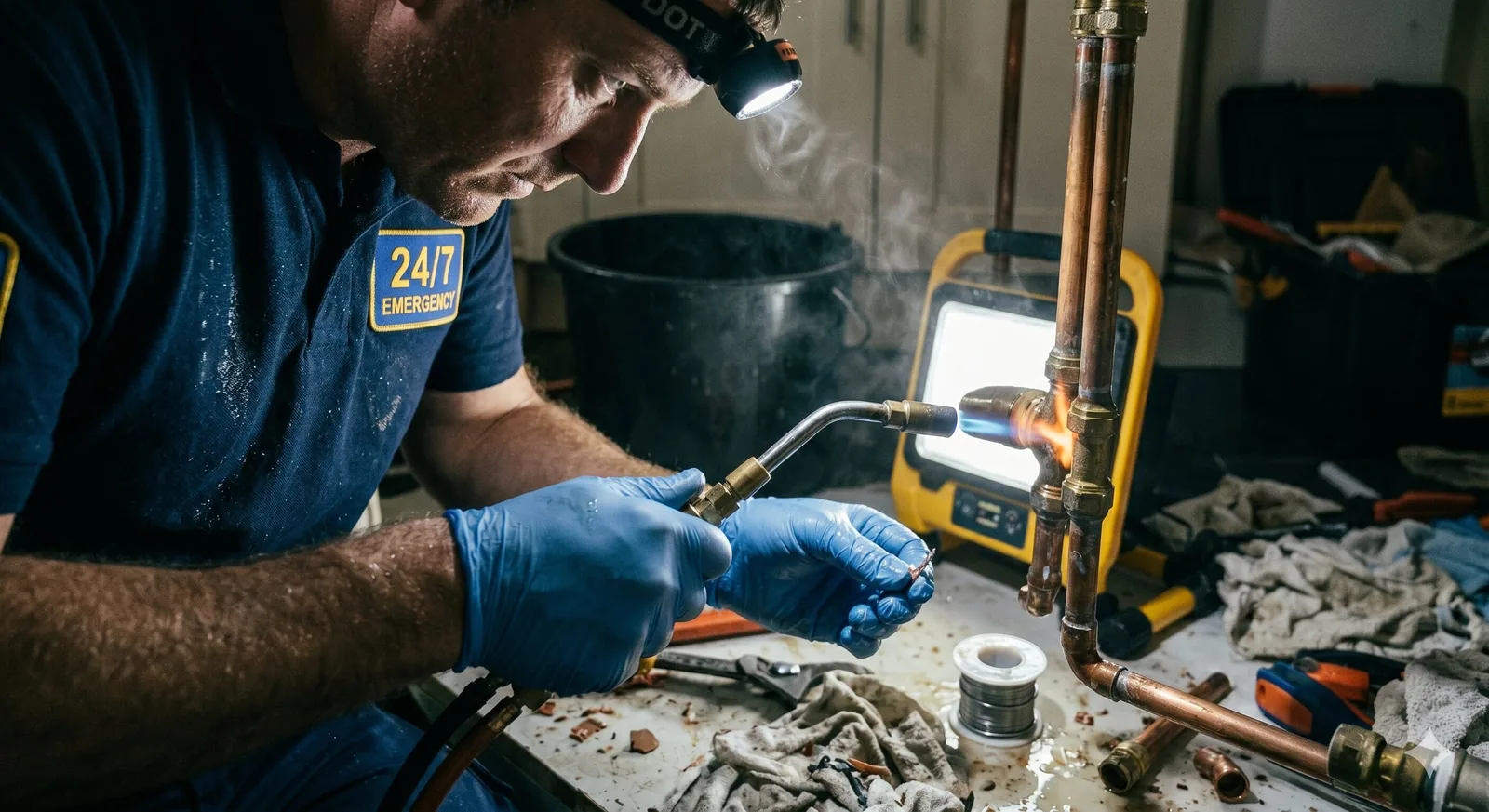
A pipe replacement job usually starts as a repair call. One section fails, the plumber cuts it out and the water comes back on. The real question is whether the pipe around that section is sound or whether it is the first of several failures.
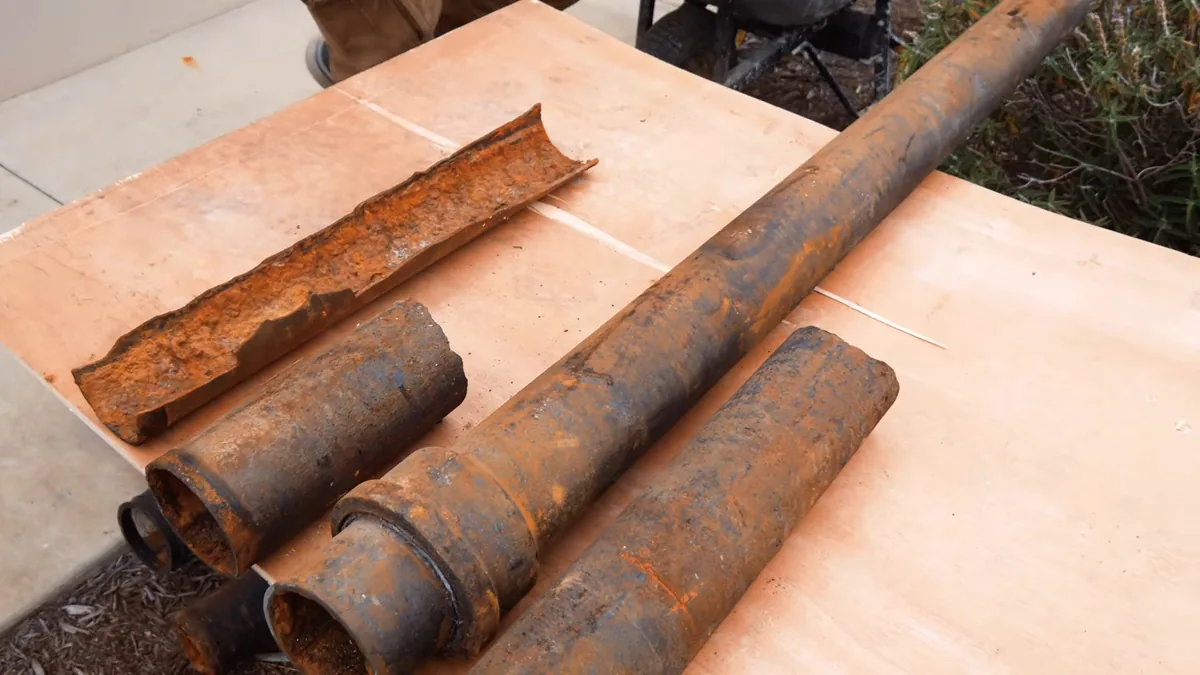
Look at the cut pipe. Clean copper with a smooth wall inside is a one-off. A wall worn thin, crusted with scale or pitted from the inside means the rest of that run is aging the same way. Galvanized steel narrows with rust until flow drops, and the pipe fails at threaded joints first.
A good plumber shows you the cut section and explains what it says. The choice between patching and replacing a run depends on how much of the line looks like the failed piece, how hard the pipe is to reach, and how much damage another failure would do.
Lines under a slab or buried outside the house are a special case. An under-slab or underground run cannot be inspected by eye, so the plumber uses a pressure test and a leak locator to confirm where the failure is before any cutting, and then compares a spot repair to a reroute through the walls or attic.
| What you see | What it suggests | Usual path |
|---|---|---|
| Clean copper, isolated pinhole | A local flaw | Cut out and replace the section |
| Thin, pitted wall | Wear along the run | Replace the run |
| Rust scale and low flow | Galvanized aging | Plan a repipe |
| Leaks at several joints | System-wide wear | Compare repipe cost to repeated repairs |