Serving Anthem, New River and Cave Creek24/7 Emergency Dispatch: (480) 806-2944
Desert Hills AZ Experts Plumbers24/7 PLUMBING DISPATCH · MARICOPA COUNTYCall (480) 806-2944 →
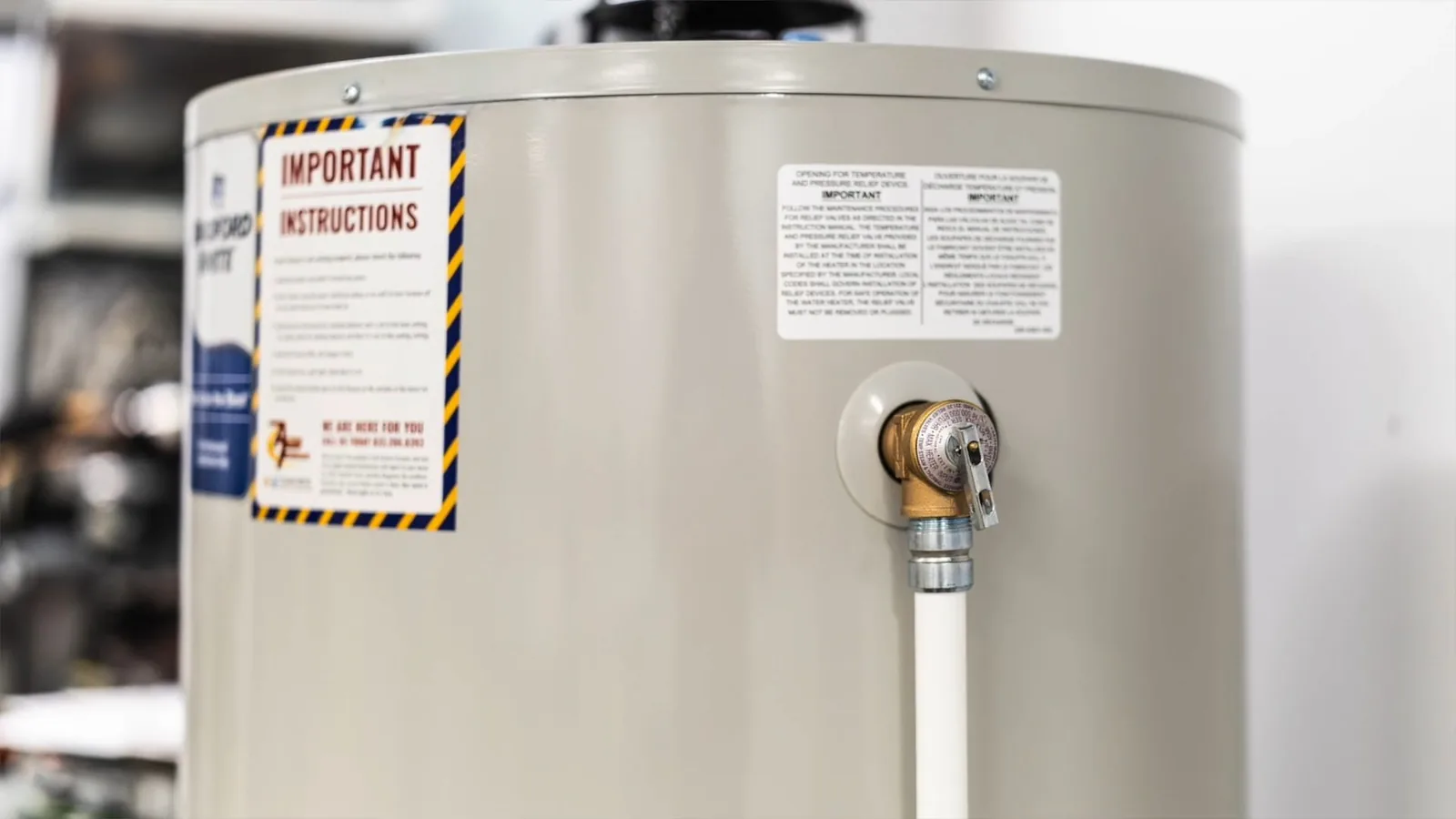
Close-up of a tank water heater's side with a white pipe connected below an instructions label.
Connections on the side of a new tank are made and checked before the water is turned back on.

Home » Services » Water heater installation and replacement

24/7 Emergency Line Open

Water Heater Replacement and Installation for Desert Hills Homes

Desert Hills sits in unincorporated Maricopa County, and that shapes the paperwork on a new tank. Describe the old heater and what failed, and a plumber serving your area will walk you through sizing, fuel and code before anything is ordered.

Call (480) 806-2944 now →
  • Licensed and insured plumbers
  • Same-day service when available
  • 24/7 emergency dispatch
Installation

Water heater installation: size, fuel and location come first

Installing a water heater starts with three decisions, and each one limits the others. How much hot water does the household use at its busiest hour, what fuel is available at the house, and where can the unit sit with room for venting, a drain pan and service access?

Tank size follows the people in the house and the habits they have. A couple that showers at different times needs far less than a family with teenagers and a soaking tub. The plumber should ask about the busiest morning, not just the headcount, and explain what the first-hour rating on the label means.

Fuel is the second choice. Gas units need a gas supply, a sediment trap, a shutoff valve and a flue with a draft that works. Electric units need a circuit sized for the elements. Hybrid heat pump units draw heat from the surrounding air and need clearance and a condensate drain. A home with propane or only electric service has narrower options than one with natural gas.

Fuel choices at a glance
TypeWhat it needsWatch for
Gas tankGas supply, flue, sediment trapVenting and combustion air in a garage
Electric tankDedicated circuit sized for the elementsPanel capacity and wire size
Hybrid heat pumpClearance, air volume and a condensate drainNeeds space around the unit
Point-of-useSmall unit near one sink or fixtureServes only that fixture
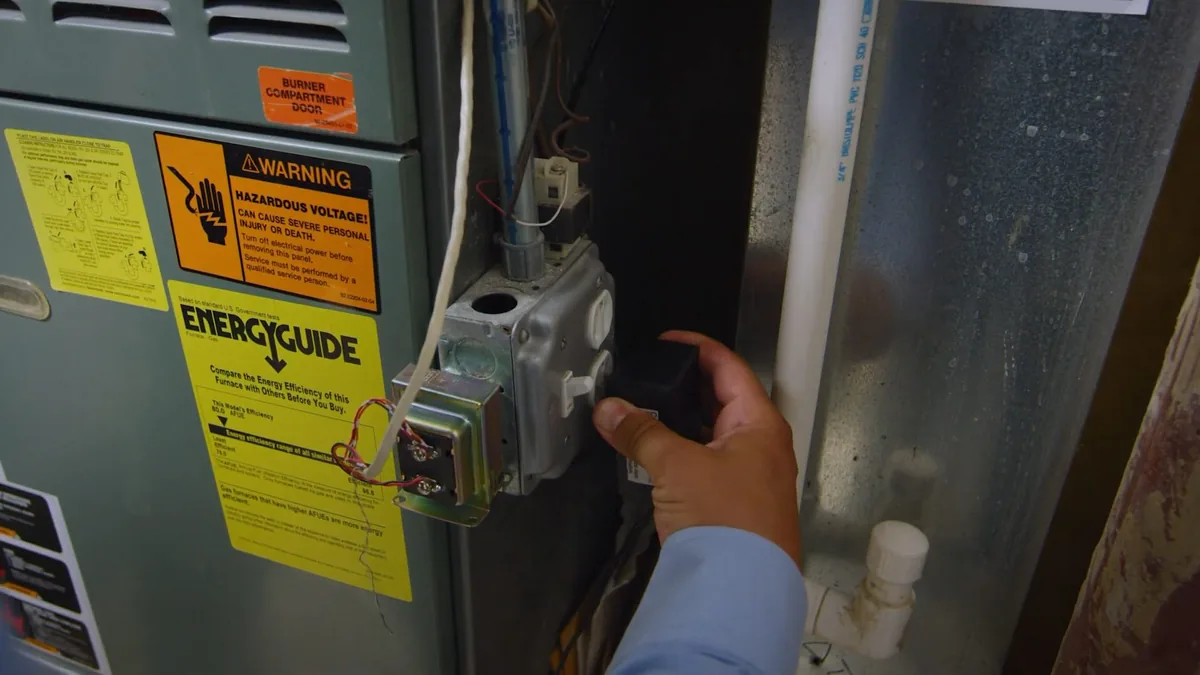
Hand turning the gas control knob on a water heater with a yellow warning label above it.
Gas controls and warning labels are checked as part of installing or replacing a heater.
Code and permits

Expansion tank, permit and code: what applies to a replacement?

A replacement is not always a permit job, and Maricopa County says so on its own site. For unincorporated areas, the county Planning and Development Department states that permits are no longer required to replace an existing water heater, provided the work follows the manufacturer specifications. That covers a like-for-like swap. A gas-fired unit may also need new piping, which the gas piping page describes.

Per the county, replacing an existing water heater needs no permit when the work follows the manufacturer specifications. New gas lines for appliances such as fireplaces and barbecues are listed separately as permit items.

County permit guidance at maricopa.gov/1629.

Anything beyond like for like changes the answer. Moving the heater, converting from electric to gas, or adding a gas line is a different job, and have the plumber check which rules cover your street before work starts. Properties inside an incorporated town follow that town rules instead of the county ones.

An expansion tank is a separate question. When the water supply has a check valve or a pressure regulator, heated water has nowhere to expand, and the pressure climbs. A thermal expansion tank absorbs it. Ask whether your system is closed, and whether the new heater needs one.

Replacement day

Replacement day: removal, hookup and testing

The visit usually follows a set order. The plumber shuts off water and fuel, drains the old tank, disconnects and removes it, then sets the new unit on a pan with a drain line. Supply connections, relief valve discharge and the fuel hookup come next.

Testing is the part to watch. A gas unit gets a leak check at every joint and a draft check at the flue. An electric unit is wired and checked for correct voltage at the elements. Both are filled and purged of air before power or fuel goes on, because a dry element burns out in seconds.

Before the plumber leaves, ask for the unit settings, the location of the shutoff valves and the relief valve, and the paperwork for the warranty. Take a photo of the data plate. Hauling away the old tank is normal, so confirm it is included in the plan.

24/7 emergency dispatch

Tank failed and you need a new one? Call now.

Call (480) 806-2944 now →
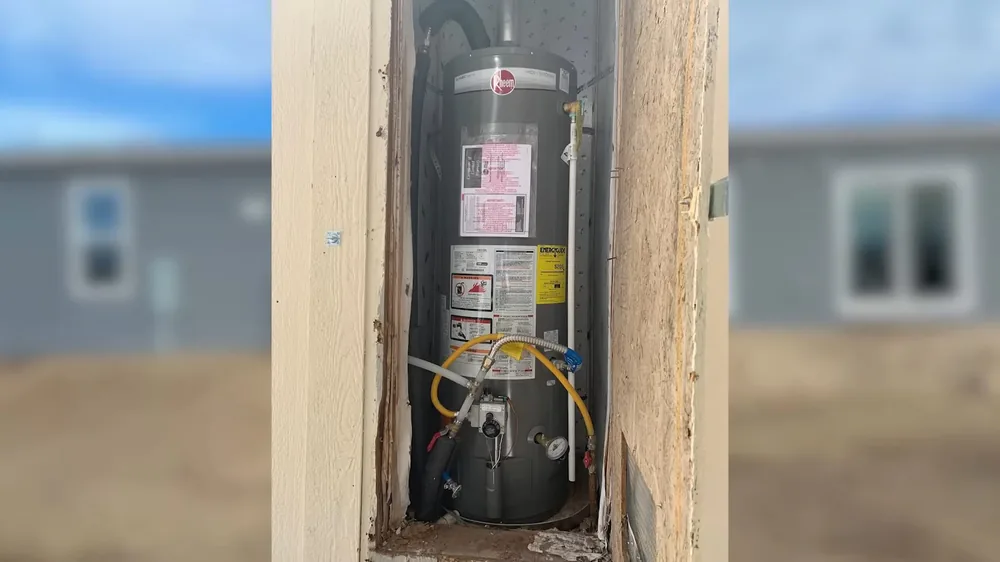
Tank water heater standing in a narrow gap between wall framing with blurred houses behind.
A heater set into a tight cavity needs its clearances planned before the new unit goes in.
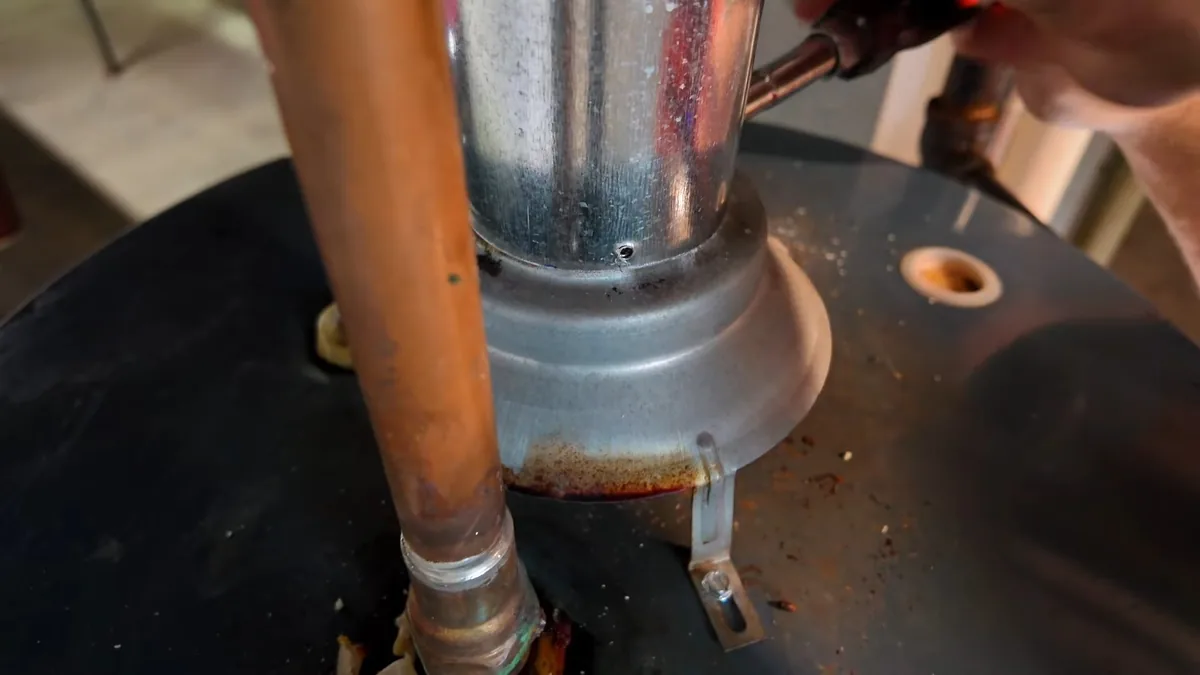
Metal flue pipe rising from the top of a tank heater beside a copper pipe.
Flue and supply connections on top of the tank are set during installation and inspected afterward.
Choosing an installer

Choosing who installs the heater: questions to ask

A water heater is a purchase with a long life, so the installer matters as much as the brand. Arizona licenses plumbing contractors through its Registrar of Contractors, and work that needs a permit or runs above the state dollar threshold has to be done under a licensed contractor. You can check a license on the registrar website before you agree to anything.

Ask who is doing the work and whether they handle the gas or electrical hookup themselves. Ask what the quote includes: the unit, the expansion tank, a new relief valve and discharge line, flexible connectors, a drain pan and disposal of the old tank. A quote that leaves these out often grows later. Ask about the warranty in plain terms: what covers the tank, what covers parts, and whether labor is covered at all.

Other options

Tank, tankless and point-of-use: a quick comparison

A tank stores hot water and refills slowly, which suits steady households. A tankless unit heats on demand and takes less space but needs a bigger gas supply or electric service, and the tankless water heater page covers it in depth. A small point-of-use unit near one sink or a distant bathroom saves the wait for hot water without replacing the main heater.

Sizing is stated in gallons for a tank and in flow rate for a tankless. Ask the plumber to show how the number was chosen, using your fixtures and your busiest hour. A written sizing note on the quote makes it easy to compare offers, and it protects you if the unit later proves too small for the house. Point-of-use units also suit an addition, a detached garage workshop or a guest suite far from the main heater, where a long pipe run wastes water and time waiting for heat.

Hard water

What local water does to a new heater

Whichever unit goes in, the water entering it matters. an EPCOR Water Arizona 2025 report put hardness near 18 grains per gallon in Anthem, and scale from water like that settles inside a tank and on the heat exchanger of a tankless unit. A new heater is a good moment to ask about a softener, which the water softener page covers. If the old heater failed early, ask the plumber to cut open or inspect the old tank so you can see how much scale it held. Scale also lowers efficiency, because it insulates the burner or element from the water. A flush every year or two, and an anode rod check, extends tank life where water is hard. Ask the installer to write the maintenance schedule on the tank.

Hardness figure: EPCOR, Anthem, 2025.

Same day

When the old heater fails and hot water cannot wait

A failed tank at night or on a weekend is a stressful call. Same-day installs depend on schedule, so say early that the heater is down. Dispatch asks a few questions first, and the front page lists what to have ready. If the old heater is still leaking, close the cold water valve and switch the unit off, and consider the heater repair guide if the tank might be saved. Have the model number, the age if known and a photo of the leak ready, and say whether the unit is in a garage, closet or attic, since access changes how fast the swap can be done. If the house has no hot water and the heater is not leaking, check the breaker or pilot first, and mention what you found when you call.

24/7 emergency dispatch

New heater, correct install. Dispatch answers 24/7.

Call (480) 806-2944 now →
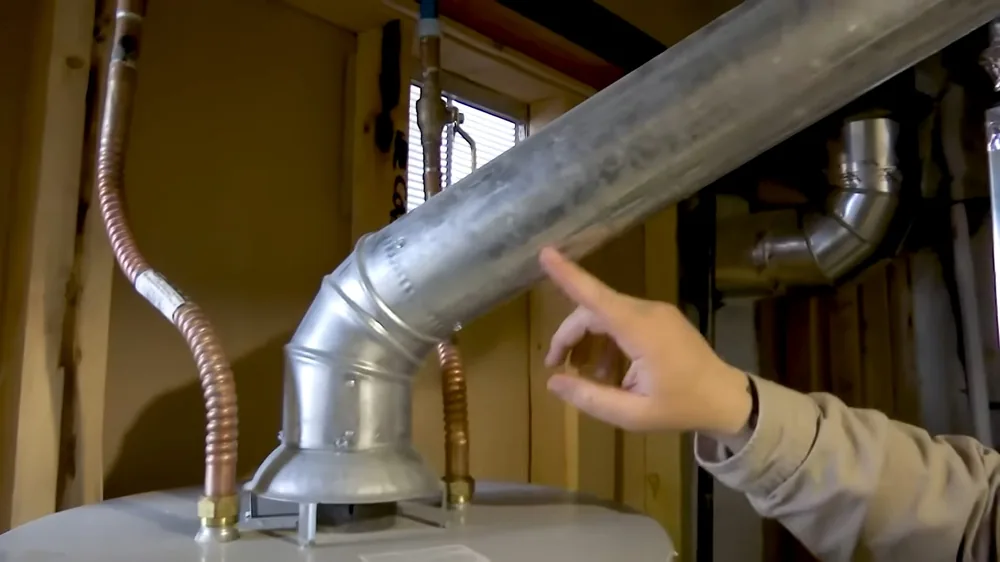
Hand pointing along a metal flue pipe that bends toward a wall above a water heater.
A flue that slopes and connects correctly carries exhaust out of the house.
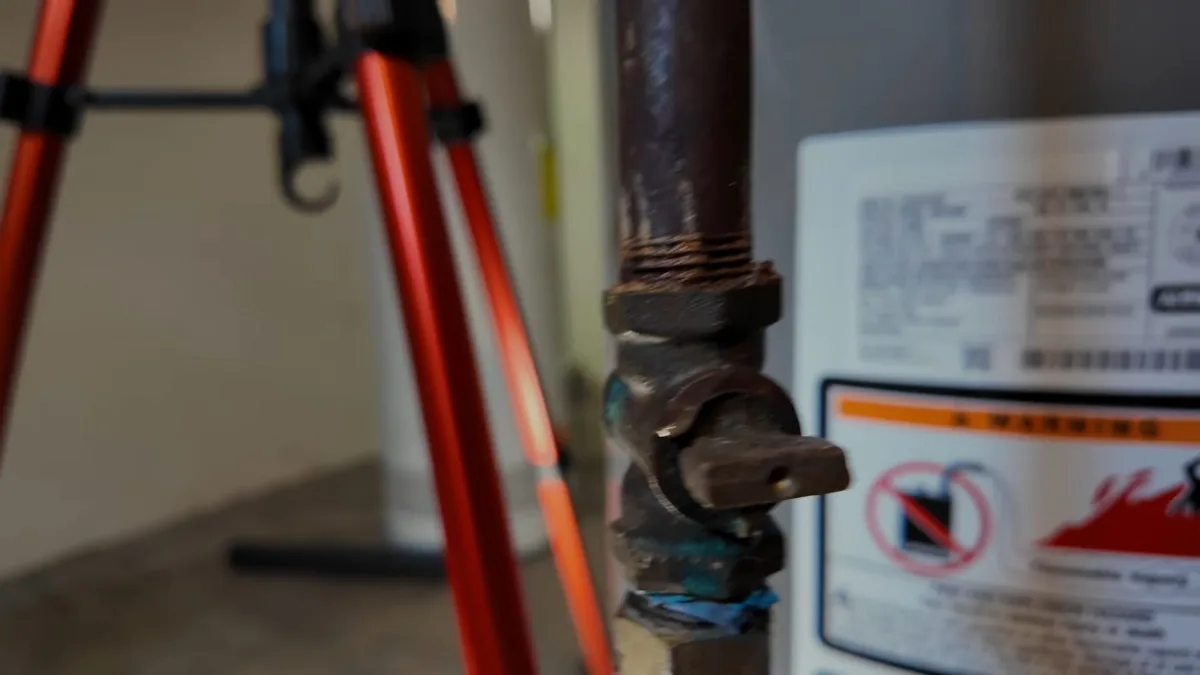
Brass threaded valve and pipe beside a heater's warning label and a red tripod.
A shutoff valve on the supply line lets you stop water to the heater during repairs.
Install visit

How a heater replacement is scheduled and completed

01

Assess

The plumber looks at the old unit, the fuel and the space.

02

Select

Size and type are matched to your busiest hour.

03

Install

Old tank out, new unit set, connections tested.

04

Handover

Settings, valves and warranty details are explained.

Questions

Installation questions answered before you book

Do I need a permit to replace my water heater?

In unincorporated Maricopa County, the county says a like-for-like replacement done to the manufacturer specifications does not need one. Changes to fuel or gas piping are different, so confirm with the plumber.

How long does the work take?

Many replacements take a half day, depending on access, venting and whether any piping has to change.

Can I switch from gas to electric?

Often, yes, if the panel and wiring can carry the load. The plumber and an electrician check capacity first.

What size tank do I need?

It depends on your busiest hour of hot water use. The plumber should explain the first-hour rating on the label.

24/7 emergency dispatch

Ready for a new water heater? One call starts the plan.

  • Licensed and insured plumbers
  • Same-day service when available
  • 24/7 emergency dispatch
Call (480) 806-2944 now →
Call now, 24/7