Serving Anthem, New River and Cave Creek24/7 Emergency Dispatch: (480) 806-2944
Desert Hills AZ Experts Plumbers24/7 PLUMBING DISPATCH · MARICOPA COUNTYCall (480) 806-2944 →
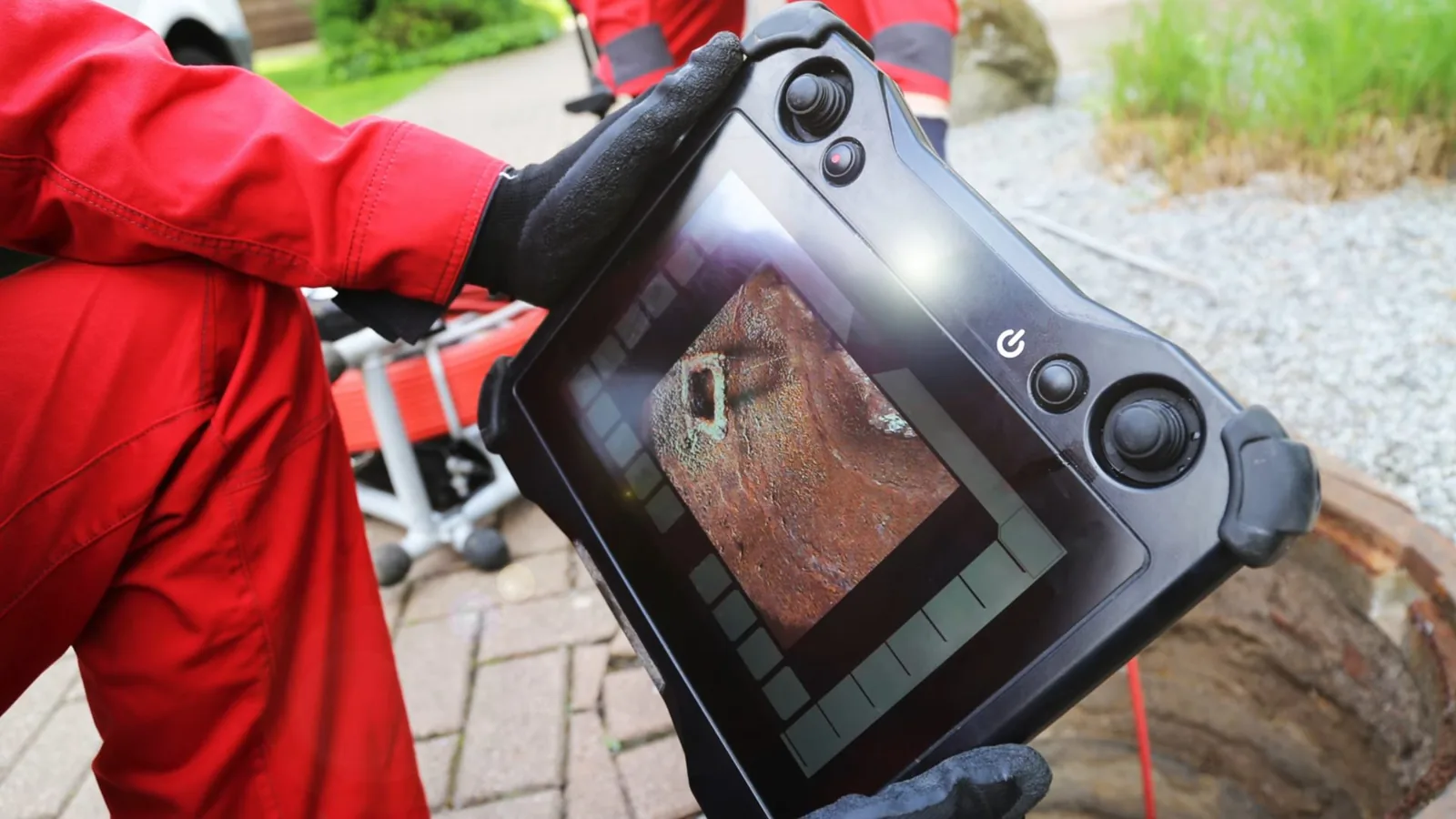
Plumber in red holding a handheld camera monitor beside a brick-paved area.
A handheld monitor shows the sewer line from the inside as the camera moves through it.

Home » Services » Sewer line repair and replacement

24/7 Emergency Line Open

Emergency Sewer Line Repair and Replacement for Desert Hills

Many people assume a sewer backup means the city line is blocked. Often the problem sits in the pipe that belongs to the house. Call, describe what is backing up, and dispatch lines up a plumber to trace it.

Call (480) 806-2944 now →
  • Licensed and insured plumbers
  • Same-day service when available
  • 24/7 emergency dispatch
Lateral

Who owns the sewer lateral, you or the utility?

The sewer lateral is the pipe that carries wastewater from your house to the larger line it connects to. Where the homeowner stops being responsible and the city or utility starts differs between providers, and the answer decides who pays for a repair.

Do not guess. Ask the provider that bills you for sewer service, or look at the plat or the connection records. If the home is on a septic system instead, there is no lateral to a public main, and the county onsite wastewater program applies to the tank and drain field. A plumber can tell you what the camera shows and where the failure sits, but ownership is a records question. Having the answer before work starts avoids a surprise.

Maricopa County Environmental Services administers onsite wastewater (septic) guidance for homeowners in the county.

Source: Maricopa County Environmental Services, septic guidance for homeowners (revised November 2025).
Sewer backup

Sewage coming up a drain: what to do before anyone arrives

A true sewer backup shows in the lowest drain of the house: a floor drain, a shower or a tub. Water and waste rise because the pipe downstream cannot carry flow away. It can happen with no warning after a heavy load, such as laundry plus a flush. Stop using water at once. Every flush, shower and wash cycle sends more into a line that has nowhere to go. Keep people and pets out of the wet area, and avoid contact with the water, which carries bacteria.

  1. Stop all water use in the house, including the dishwasher and washing machine.
  2. Keep people and pets out of the affected room.
  3. Do not pour chemical cleaners into a backed-up line.
  4. Photograph the backup and the water line on the wall.
  5. Call dispatch and say which drain is backing up.
Safety note

Sewage is a health hazard. Wear gloves and boots if you must enter the area, never touch electrical equipment standing in water, and wash thoroughly afterward.

Sewer cleaning

Sewer cleaning and rooting: clearing the line before judging it

Clearing a blocked sewer line comes first, so the pipe can be seen and tested. A cable with a rooter blade cuts through roots and scale. Water jetting then washes debris out and scours the pipe wall. Cleaning also tells the plumber something: where the cable stops, how much came out and what it looked like. Cleaning alone is a short-term answer when the cause is a damaged pipe. Roots enter through cracks and open joints, so a line that clogs again within months is asking for a camera, not another cable. Routine blockages inside the house, such as a single sink or tub, are handled on the drain cleaning page. This page picks up when the problem is the line that leaves the house.

Sewer repair

Is a spot repair enough? Sewer repair when one section failed

When the camera shows one bad section, such as a cracked joint, a root intrusion or a short offset, the repair can be limited to that stretch. A plumber excavates at the failed section, cuts out the damaged piece and installs new pipe, or lines the pipe from inside without a long trench.

A repair is a good answer when the rest of the line is in decent shape. It is a poor answer when the camera shows many weak points, because each repair can leave the next joint to fail. Ask for the video, and ask how much of the line looks sound. Digging for a sewer repair starts with a locate request. Arizona 811 asks for notice two full working days before excavation, so the plumber calls before breaking ground.

Source: Arizona 811.

24/7 emergency dispatch

Sewer smell or backup? Call dispatch now.

Call (480) 806-2944 now →
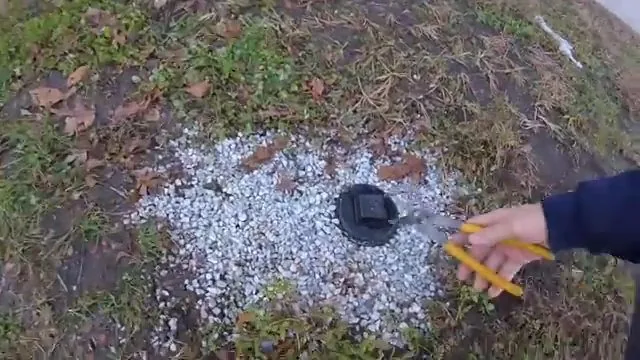
Black drain cleanout cap set in gravel with a hand holding a yellow marker beside it.
A capped cleanout in the yard gives a plumber access to the sewer line without opening the house.
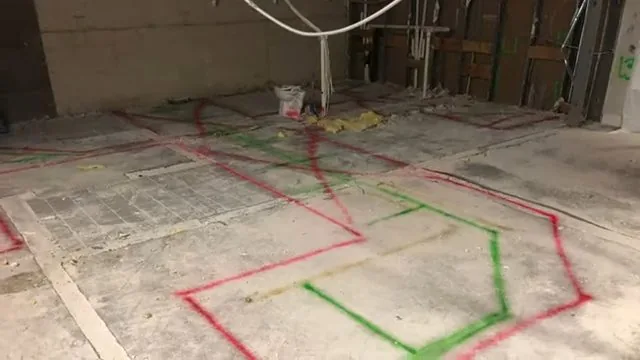
Concrete floor marked with red and green paint lines showing where pipes run.
Painted lines on a floor mark the pipe route and guide any cutting.
Inspection

Camera inspection: seeing the pipe before deciding anything

A sewer camera is a small waterproof lens on a flexible rod that travels through the line and sends video to a screen. It shows the pipe material, cracks, sags, roots, offsets and where each problem sits along the run. The same camera works as sewer leak detection, since water seeping in at a joint or running out of a crack is visible on the screen. A locator then marks the camera head position at the surface, which turns the video into a map of where to dig, if digging is needed. Without that map, a repair estimate is a guess. Ask to see the video, or to receive it. A plumber who recommends replacement should be able to show you what justifies it.

What the camera can show
FindingWhat it suggestsLikely next step
Roots entering at jointsOpen joints or cracksCut roots, then repair or line
Sagging section holding waterPipe has settledRepair or replace that section
Cracked or broken pipeFailed material or ground movementRepair or replacement
Clean, sound pipe with debrisBuildup rather than damageJet and clean regularly
Offset jointSections have shifted apartSpot repair or lining
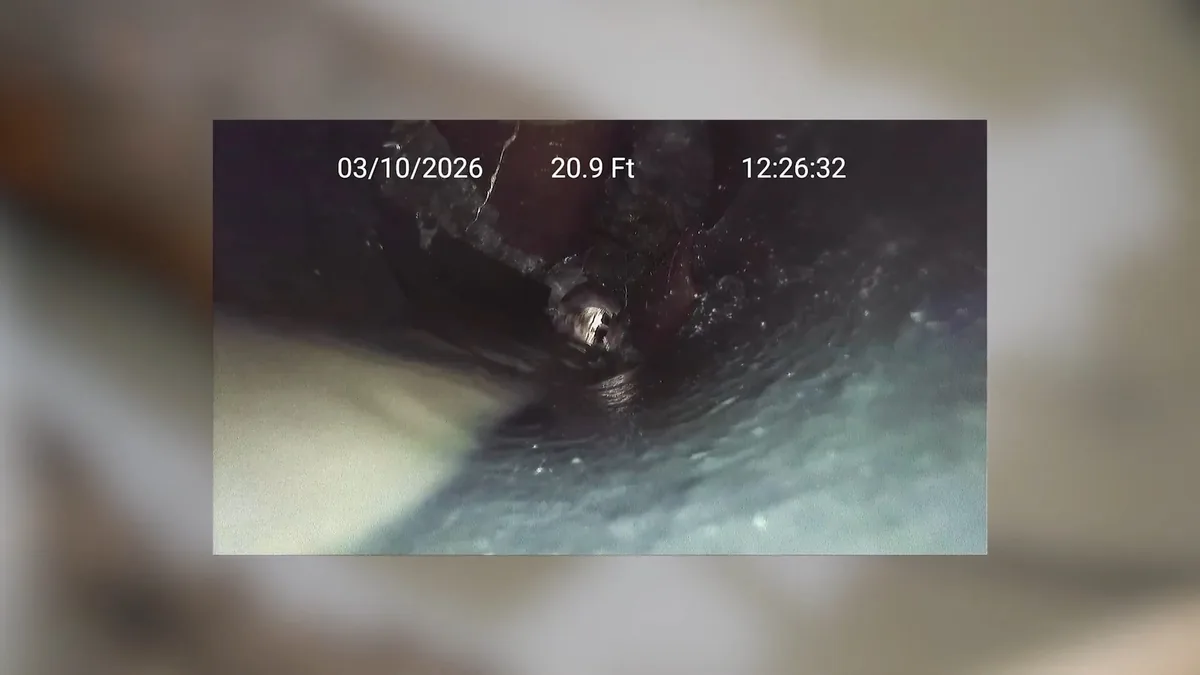
Blurred camera view down a dark pipe with a date and footage counter on the screen.
Footage from inside the pipe can show cracks, roots and sags before anyone digs.
Replacement

Sewer line replacement: when the whole run has to go

Replacement makes sense when the pipe has failed along much of its length, when sections have collapsed, or when repeated spot repairs have stopped holding. A plumber runs a new pipe along the old route or a new one, connects it at both ends and restores the surface.

Older homes may have clay, cast iron or Orangeburg, a layered fiber pipe from the mid twentieth century. Orangeburg can soften and deform over time, and cast iron scales and cracks. If your pipe is one of these, a camera will usually show the condition, and replacement is often the lasting answer. Because replacement is a larger project, get the scope in writing: where the trench runs, what surface will be restored, how long the sewer will be out of service, and who handles any permit.

Trenchless

Trenchless sewer repair, relining and pipe bursting

Trenchless methods repair a sewer with minimal digging. Relining pulls a resin-saturated liner through the pipe and cures it into a new pipe inside the old one. Pipe bursting pulls a new pipe through while breaking the old one apart. Both need only small access pits at each end. They suit lines under driveways, patios and landscaping that a trench would destroy. They do not suit every pipe: a collapsed section or a heavy offset may need excavation, and relining can slightly reduce the pipe diameter. A camera inspection decides which method fits. A plumber should be able to tell you why trenchless is or is not right for your line, and what the surface will look like when the work is done, since access pits still need patching.

Smaller signs

Cleanouts, sewer smell and old pipe materials

Find your cleanout. It is a capped pipe near the house or the property line that gives a plumber direct access to the sewer. Keep the cap clear of landscaping so it can be reached. A sewer smell outdoors near the cleanout, or gurgling indoors after a flush, can be an early warning, so mention either one to the plumber even if the drains still work.

Standing water over the line, a sinkhole in the yard or a patch of unusually lush grass can mean a broken pipe underground. If the first sign is water on the floor of the house, damage may follow, and the water removal and drying page explains cleanup and drying.

24/7 emergency dispatch

Emergency sewer problem? One call starts the response.

Call (480) 806-2944 now →
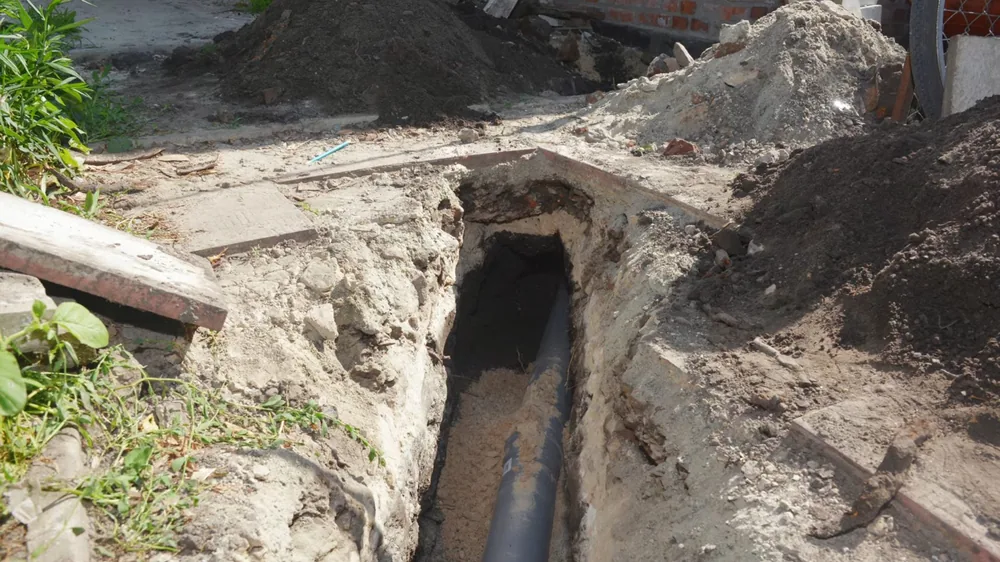
Open trench with a dark sewer pipe exposed along its bottom beside piled sandy soil.
Digging to reach a failed section is the step a camera inspection tries to limit.
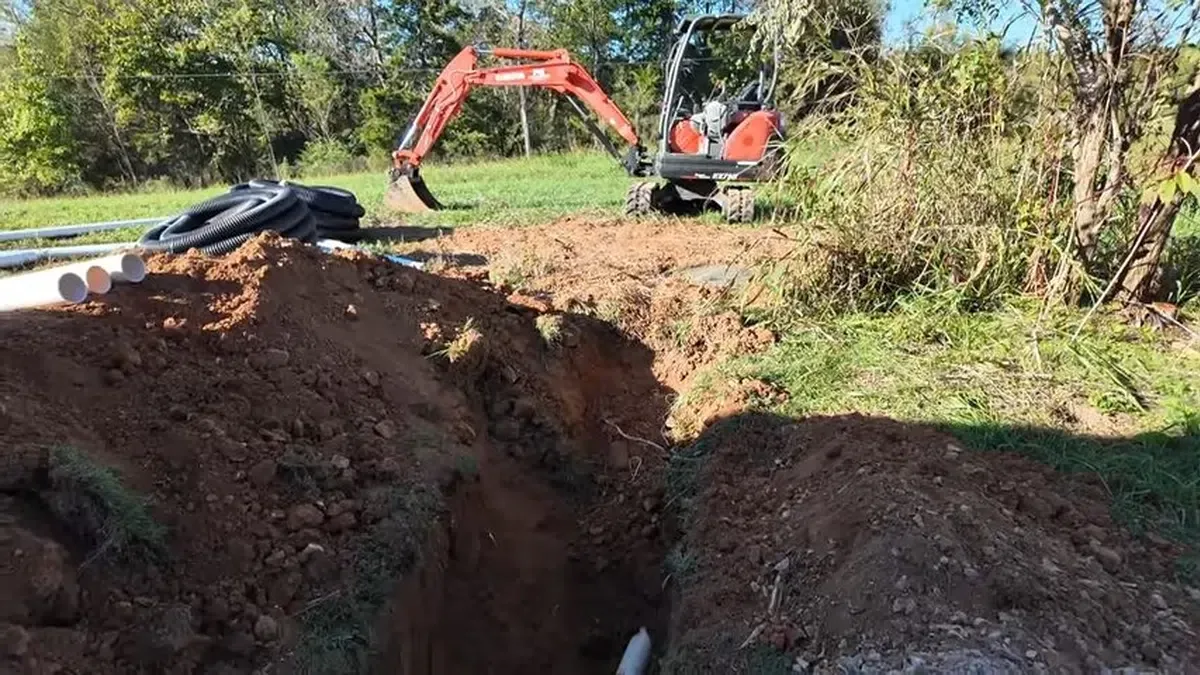
Excavator beside an open trench in a grassy yard with lengths of pipe lying nearby.
A full replacement means a trench along the old line, so the route gets planned first.
Sewer visit

What happens on a sewer call, step by step

01

Stabilize

Water use stops and the line is accessed at the cleanout.

02

Clear

The blockage is cut or jetted so the pipe can be viewed.

03

Inspect

A camera records the pipe and a locator marks the spot.

04

Decide

Repair, lining or replacement is explained with the video.

Questions

Sewer line questions before you call

Is a sewer backup an emergency?

Yes. Sewage in the house is a health risk and the line cannot clear itself. Stop using water and call; the emergency plumber page on the homepage explains what dispatch asks first.

How do I know if the problem is the sewer line or a drain?

A single sluggish fixture normally has a local blockage. When several back up together, or the lowest drain overflows, suspect the sewer line.

Can the line be repaired without digging up my yard?

Sometimes. Relining and pipe bursting need only small access pits, and a camera shows whether the pipe suits them.

Who pays for the repair?

That depends on who owns the failed section, which is a records question for your sewer provider. A plumber can tell you where the failure is.

24/7 emergency dispatch

Do not wait on a sewer backup. Dispatch answers 24/7.

  • Licensed and insured plumbers
  • Same-day service when available
  • 24/7 emergency dispatch
Call (480) 806-2944 now →
Call now, 24/7